
Home › AI Career Guides › AI Model Validator
AI Model Validator Career Guide: Independent Challenge
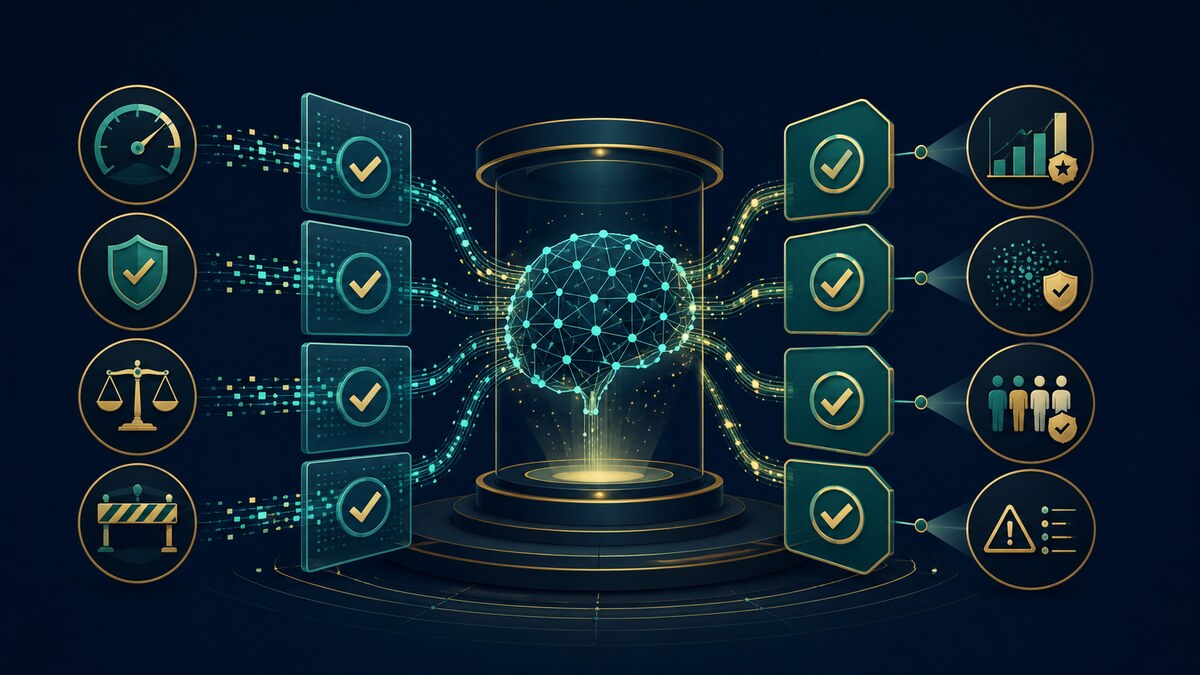
An AI Model Validator independently evaluates whether a model is conceptually sound, implemented correctly, performing adequately, and suitable for its intended use. Validation is more than rerunning the developer’s tests. The validator examines assumptions, data, methodology, controls, limitations, documentation, monitoring, and the consequences of failure. Independence matters because the team that builds or selects a model should not be the only team deciding whether its evidence is sufficient.
What the role does
Validators review model design and intended use, reproduce performance tests, assess data representativeness and leakage, challenge feature choices, test robustness and stability, evaluate fairness and explainability, verify implementation, examine human oversight, and determine whether monitoring thresholds are meaningful. For generative AI, they may design evaluations for factuality, harmful content, prompt injection, retrieval quality, privacy leakage, refusal behavior, and consistency across user groups. They document findings, rate their severity, recommend conditions or restrictions, and follow remediation to closure.
Skills employers seek
The role requires analytical independence, statistical and machine-learning literacy, experimental design, reproducible testing, technical writing, and risk judgment. Python, SQL, notebooks, model-evaluation libraries, data visualization, and familiarity with MLOps environments are frequently useful. Strong validators understand that no single metric establishes fitness. They connect test results to the actual decision, population, environment, and harm that the system can create.
Career path and credentials
Typical feeder roles include data scientist, quantitative analyst, model developer, QA engineer, machine-learning evaluator, risk analyst, and technology auditor. Career progression may move from validation analyst to senior validator, validation manager, Model Risk Manager, head of validation, or AI assurance leadership.
Degrees in statistics, economics, computer science, engineering, mathematics, or a related field are common. FRM, PRM, AIGP, specialized machine-learning education, or sector-specific credentials can help. A portfolio of transparent, reproducible validation work is often more persuasive than a long list of certificates.
How to prepare
Select a public model or dataset and write an independent validation report. Include intended use, test design, benchmark selection, subgroup analysis, robustness checks, limitations, findings, severity, and recommended deployment conditions. Make the analysis reproducible and explain what evidence would change your conclusion.
Related guides: Model Risk Manager, AI Evaluation Specialist, AI Auditor, AI Risk Manager. Related skills: AI Evaluation and Testing, Model Risk Management, Evidence Documentation, Data Quality.