
Home › AI Career Guides › AI Product Manager
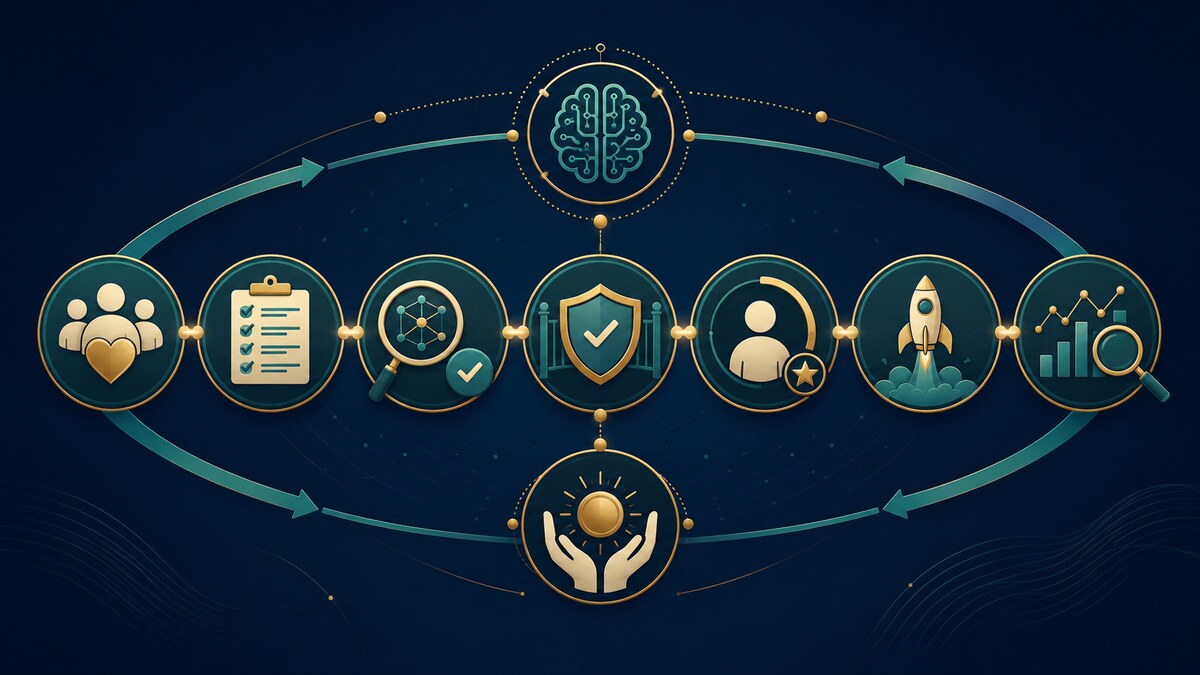
AI Product Manager Career Guide: Responsible Product Edition
An AI Product Manager defines the problem an AI-enabled product should solve and coordinates the decisions required to build, buy, launch, monitor, and improve it. In governed environments, product management also means establishing acceptable behavior, identifying affected users, making risk tradeoffs visible, setting evaluation criteria, documenting limitations, and ensuring that release pressure does not bypass required review.
What the role does
Responsibilities include user and problem discovery, use-case definition, product requirements, roadmap ownership, prioritization, data and model decisions, vendor evaluation, evaluation planning, safety and abuse analysis, governance review, launch criteria, monitoring, incident response, and lifecycle decisions. The product manager connects business goals to measurable outcomes and helps establish when an AI capability should not be released, should be limited to a smaller population, or requires human confirmation.
Skills employers seek
Employers value product judgment, user research, metrics, experimentation, technical fluency, stakeholder leadership, written requirements, and the ability to balance benefit with risk. Responsible AI product managers should understand model limitations, data provenance, privacy, security, fairness, accessibility, human factors, transparency, and post-launch monitoring. They should be comfortable documenting unresolved uncertainty rather than presenting estimates as facts.
Career path and credentials
Feeder roles include product analyst, business analyst, technical product manager, data product manager, AI program manager, UX researcher, solution consultant, and governance or risk professional with strong product exposure. Progression may lead to Senior AI Product Manager, Director of AI Product, Responsible AI Product Lead, or Head of AI Products.
Product management credentials can help early in a transition, while AIGP, privacy, security, or AI-risk education strengthens governed-product credibility. Employers will look for evidence of decisions: a clear product brief, evaluation plan, launch checklist, risk acceptance record, and monitoring dashboard.
How to prepare
Create a product requirements document for a high-impact AI feature. Include the intended outcome, affected users, non-goals, prohibited uses, data requirements, evaluation measures, abuse cases, human-oversight design, disclosures, launch gates, monitoring, rollback conditions, and accountable owners.
Related guides: AI Program Manager, Responsible AI Lead, AI Governance Manager, AI Evaluation Specialist. Related skills: AI Impact Assessment, Stakeholder Communication, AI Evaluation and Testing, Incident Response.