Home › AI Career Guides › Chief Compliance Officer
Chief Compliance Officer
AI Compliance Edition
How AI is reshaping the compliance executive’s mandate: the new responsibilities, the skills that set exceptional leaders apart, and the certifications that matter.
Artificial intelligence is transforming the role of the Chief Compliance Officer.
Not long ago, compliance leaders focused primarily on regulations, internal investigations, ethics, and internal controls. Those responsibilities remain essential, but today they are joined by a rapidly expanding set of challenges that involve artificial intelligence, algorithmic accountability, data governance, privacy, and global regulatory compliance.
Organizations are looking for compliance executives who can help leadership embrace AI while managing the risks that come with it. The modern Chief Compliance Officer is becoming one of the most influential voices in enterprise AI governance.
Why This Career Guide Matters
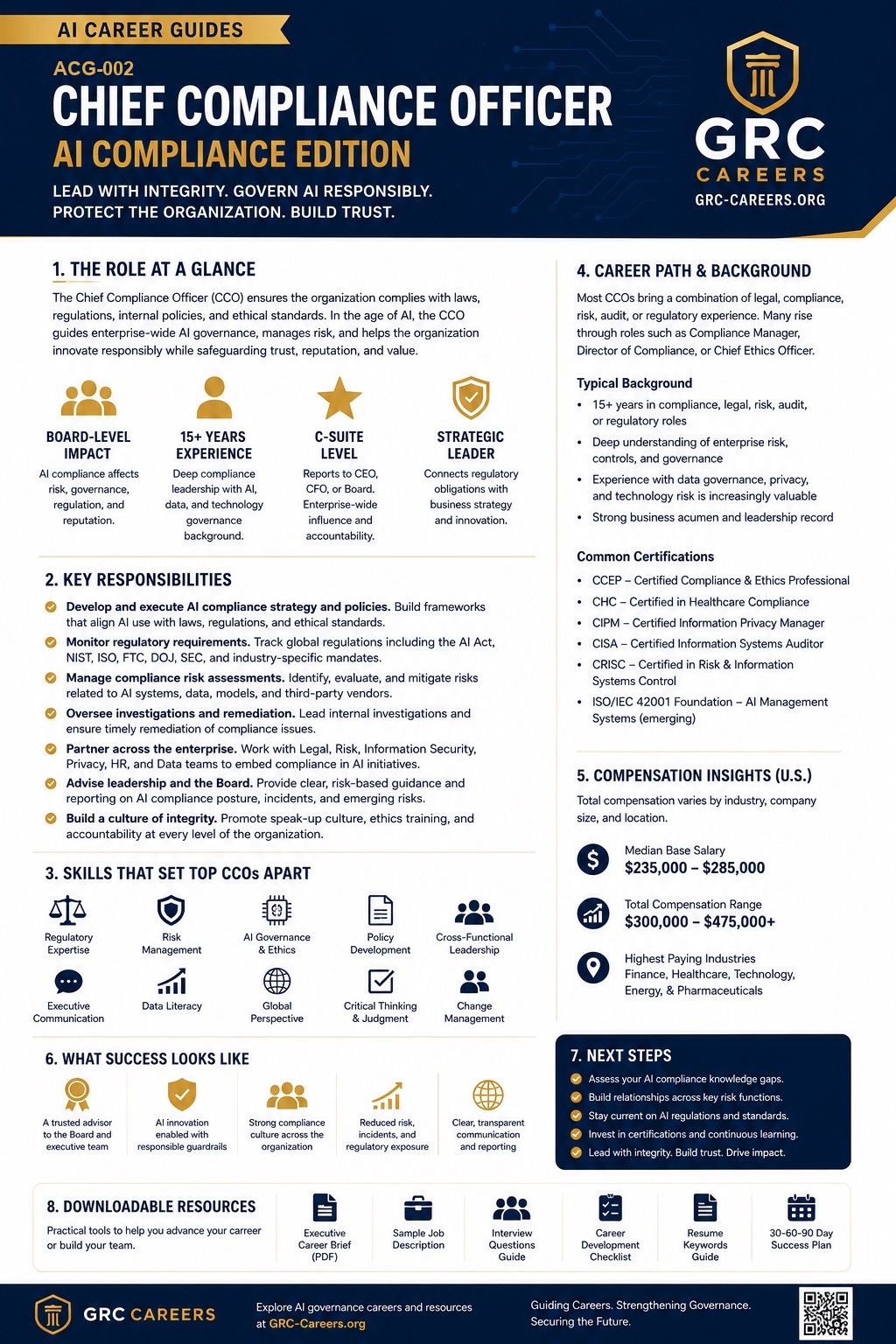
AI has introduced new responsibilities that many compliance leaders never expected to oversee. Today’s Chief Compliance Officer may be responsible for:
- AI governance oversight
- Regulatory compliance for AI systems
- AI policy development
- Model risk management
- Vendor due diligence
- Ethical AI governance
- Board reporting
- Cross-functional governance committees
As AI adoption accelerates, organizations increasingly need compliance leaders who understand both regulatory obligations and practical implementation.
Core Responsibilities
Typical responsibilities include:
- Develop enterprise AI governance policies.
- Monitor emerging AI regulations around the world.
- Coordinate AI compliance across legal, risk, security, privacy, HR, and technology teams.
- Evaluate AI vendors and third-party risks.
- Lead AI compliance assessments and reporting.
- Advise executive leadership and boards on AI governance issues.
- Build a culture of responsible AI throughout the organization.
Skills That Differentiate Exceptional Compliance Leaders
Successful Chief Compliance Officers combine technical awareness with executive leadership. Key capabilities include:
- Regulatory interpretation
- Enterprise risk management
- AI governance frameworks
- Policy development
- Executive communication
- Board reporting
- Cross-functional leadership
- Ethical decision making
- Strategic thinking
- Change management
Certifications Worth Considering
Depending on industry and career goals, professionals often pursue certifications in compliance, risk management, privacy, information security, and AI governance.
For certification roadmaps and learning paths, visit GRC-Careers.org.
Who Should Read This Guide?
This resource is designed for:
- Current Chief Compliance Officers
- Deputy Compliance Officers
- Compliance Managers
- General Counsel
- Internal Auditors
- Risk professionals
- Privacy professionals
- Professionals transitioning into AI governance
Explore current Chief Compliance Officer openings and AI compliance leadership positions on AI-Governance-Jobs.com.
Browse Chief Compliance Officer jobs →Related AI Governance Essentials
- AGE-001 — What Is an AI Inventory?
- AGE-002 — AI Use Policy
- AGE-003 — AI Risk Assessment
- AGE-004 — AI Risk Register (coming soon)
- AGE-005 — AI Governance Committee (coming soon)
- Browse the full AI Governance Essentials series →
Related AI Career Guides
- ACG-001 — CISO With AI Security Focus
- Chief Risk Officer: AI Risk Edition (coming soon)
- Chief Privacy Officer: AI Privacy Edition (coming soon)
- AI Governance Manager (coming soon)
- Browse all AI Career Guides →
AI Career Guides (ACG) is an ongoing series created to help professionals understand how artificial intelligence is reshaping executive leadership roles. Each guide explores evolving responsibilities, in-demand skills, career pathways, and related AI governance concepts to help leaders prepare for the future of work.