
Home › Cybersecurity & GRC Career Guides › AI Incident Response Skills
AI Incident Response Skills
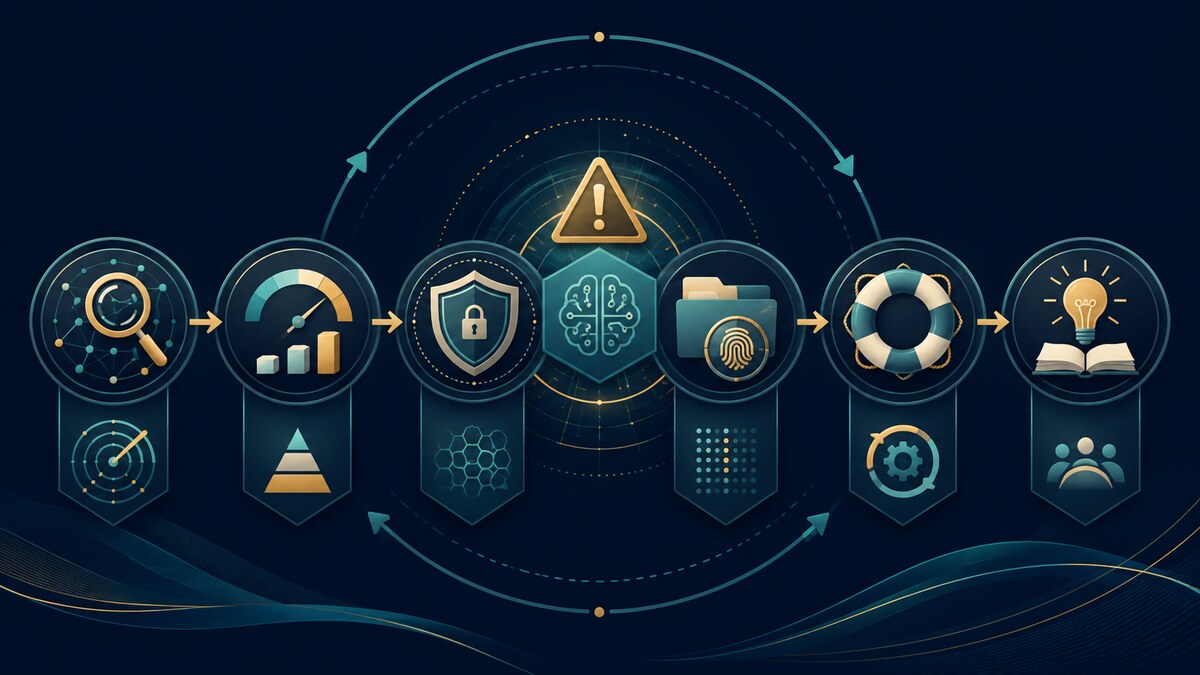
AI incident response is what happens after a model does something it should not have, in production, to real people. It borrows heavily from security incident response and then diverges at almost every step, because the failure is usually not a breach and there is frequently no moment when anything broke.
Detection is the hard part
A security incident announces itself. A ransomware note, an alert, a customer call. An AI failure often does not. A model that has been quietly declining in accuracy for eleven weeks produces no alarm at all, and the first signal is commonly a complaint, a journalist, or a regulator.
Which means detection has to be built rather than waited for. Output distribution monitoring, so a shift in what the model is producing raises something. Subgroup performance tracking, because aggregate accuracy can hold steady while a specific group's experience collapses. Complaint channels that are actually connected to the team that owns the model, which is far rarer than it sounds. And human override rates, since a sudden rise in reviewers rejecting recommendations is often the earliest honest signal you will get.
Containment without a plug to pull
Turning the system off is sometimes right and frequently not available. If a model is triaging clinical cases or approving payments, switching it off has its own consequences and someone has to own that choice.
The realistic options are graduated: revert to a previous model version, fall back to a rules-based path, route affected cases to humans, restrict the system to a narrower population, or lower the confidence threshold at which it acts alone. Deciding which, quickly, requires knowing beforehand what the fallback is. Teams that have never articulated their fallback discover during the incident that there is not one.
The part with no security equivalent
Ask who was already affected, and what you owe them.
If a model has been making biased decisions for two months, the incident is not over when the model is fixed. There are people who received a decision they should not have received. Identifying them, deciding whether to revisit those decisions, and telling them, is a question of law, ethics and public standing that has no counterpart in a typical security incident.
It is also the question organizations most want to avoid, which is exactly why the person who raises it early is valuable.
Reporting obligations are arriving
Under the EU AI Act, providers of high-risk AI systems must report serious incidents to the relevant market surveillance authority, with obligations set out in Article 73. Sector regulators are adding their own expectations. Where personal data is involved, existing breach notification rules may run in parallel on their own clocks.
The practical consequence is that someone has to know which clocks started, on the day, while everything else is happening.
The retrospective is where the value is
The useful question is rarely why the model was wrong. Models are wrong routinely. It is why nothing caught it for eleven weeks.
That reframing turns a technical post-mortem into a governance finding, and governance findings are what stop the next one. If you can describe having done that once, you have the interview answer for this entire subject.
Where to go next
- Browse the jobs that use these skills
- Follow a career roadmap into the role you want
- Hiring for this? Start from a job description template
- Free certification study games, 652 practice questions
Frequently Asked Questions
What is AI incident response?
The discipline of detecting, containing, investigating and remediating harmful behavior by an AI system in production. It borrows structure from security incident response but differs because most AI failures are gradual and produce no alert.
Why is detecting AI incidents harder than security incidents?
Because there is usually no moment when something breaks. A model declining in accuracy over weeks generates no alarm, and the first signal is frequently a complaint, a journalist or a regulator rather than a monitoring system.
What should be monitored to detect AI incidents?
Output distribution shifts, subgroup performance rather than aggregate accuracy, complaint channels genuinely connected to the owning team, and human override rates. A rise in reviewers rejecting recommendations is often the earliest honest signal available.
How do you contain an AI incident?
Rarely by switching the system off, since that has consequences of its own. Realistic options are reverting to a previous model version, falling back to a rules-based path, routing affected cases to humans, narrowing the population served, or raising the confidence threshold at which the system acts alone.
What is unique about AI incident remediation?
The question of who was already affected. If a model made biased decisions for two months, fixing the model does not end the incident. Identifying affected people, deciding whether to revisit those decisions, and telling them, has no real counterpart in security incident response.
Are there regulatory reporting obligations for AI incidents?
Yes and they are expanding. The EU AI Act requires providers of high-risk systems to report serious incidents to the market surveillance authority under Article 73. Sector regulators are adding expectations, and where personal data is involved existing breach notification rules run in parallel on their own timelines.
What should an AI incident retrospective focus on?
Not why the model was wrong, since models are wrong routinely, but why nothing detected it sooner. That reframing turns a technical post-mortem into a governance finding, which is what prevents recurrence.
Who should be on an AI incident response team?
The model owner and an engineer who can change the system, someone who understands the affected domain, legal or compliance for the reporting clocks, communications, and someone with authority to accept the consequences of containment.
What jobs require AI incident response skills?
AI governance manager, responsible AI lead, ML operations, security incident response extending into AI, model risk, and any role owning production AI systems in a regulated sector.
More in this series
- 9 Essential Data Governance Skills for the AI Era
- 10 Internal Audit Skills for Modern Assurance Careers
- 12 Transferable GRC Skills You May Already Have
- Technical vs. Nontechnical GRC Skills: What Employers Actually Need
- AI Governance Skills Employers Actually Hire For
- GRC Analyst Skills: What the Job Actually Requires
- Compliance Analyst Skills
- Risk Assessment Skills
- Controls Testing Skills
- Policy Writing Skills
- Regulatory Change Management Skills
- Third-Party Risk Skills
- Model Risk Management Skills
- AI Impact Assessment Skills
- AI Auditing Skills
- AI Evaluation and Testing Skills for Governance Careers
- Data Lineage Skills
- Data Quality Skills
- Privacy Engineering Skills
- AI Security Skills
- Governance Program Management Skills
- Stakeholder Communication Skills
- Executive Risk Reporting Skills
- Evidence Documentation Skills
- Control Mapping Skills
- Framework Crosswalking Skills
- Vendor Due Diligence Skills
- Responsible AI Skills
- GRC Tools and Automation Skills
- How to Build the 9 Data Governance Skills: A 12-Month Career Plan
- 10 In-Demand Compliance Skills for Today’s GRC Careers
- 10 Essential Risk Management Skills Employers Value
- 10 In-Demand Data Privacy Skills for Privacy Professionals
- 10 Cybersecurity Skills for GRC and Security Careers
- 9 AI Assurance Skills for Audit, Risk, and Governance Professionals
- Writing a Resume for AI Cybersecurity Jobs
- Founder of ExecSearches and GRC Careers
- Executive search across corporate, higher education, financial services, and nonprofit sectors
- Focus on AI governance and GRC hiring
- More than a decade in risk advisory and internal audit in financial services
- Led SOX and regulatory audits for Citi, Goldman Sachs, Morgan Stanley, and McKesson
- Public Accounting Certification, Cornell University